Meitu Xiu Xiu ("Meitu") (Chinese: 美图秀秀) is an image editing software that is mostly used in Mainland China but is also popular in Hong Kong and Taiwan. It is only available on Google Play and App Store in certain countries. It provides tools for editing photos: filters, retouching, collage, scenes, frames, and photo decorations, as well as generative AI features such as text-to-images, AI removal and AI repainting etc. Meitu is one of the apps developed by Meitu, Inc.; it also produced BeautyCam, Wink and X-Design. == History == Meitu's PC version was created in 2008 by Wu Xinhong, the CEO of Meitu. In 2013, its mobile version became one of the first must-have mobile apps in China. Meitu, Inc. is a photo and video-centered app developer, which was founded in 2008 in Xiamen. Currently, the major revenue source of Meitu is premium subscription. Meitu, Inc. was initially funded by Cai Wensheng, a well-known angel investor. The company has an approximately 250 million monthly active users globally. == Function == === Edit === MeituPic provides a number of photo-editing tools. The major functions are auto enhance, edit, enhance, filters, frames, magic brush, mosaic, text, and blur. Auto enhance focuses on the nature of photos taken, while Edit includes functions of cropping, rotation, sharpening, and adjustment of ratio. For Enhance, users can apply slight adjustment on the photo by controlling the levels of brightness, contrast, colour temperature, saturation, highlight, shadow and smart light. Major types of filters are LOMO, beauty, style as well as art. Different frames can be chosen from poster, simple, and fantasy. Magic brush provides a great variety of brushes with different colours and patterns for users to decorate the photos. Mosaic brush enables users to cover certain parts of the photo. Texts can be added to the photo. Choices of different bubbles, font as well as style of words are available. Blurring effect is also available to make the photo less distinct and clear. === Beauty Retouch === There are seven major functions for retouching a photo: automatic retouch, smooth and whiten skin, remove blemish, make slimmer, remove dark circles and bags under the eyes, make taller, and enhance the eyes. Automatic retouch enhances portraits by lightening the skin tone, brightening the eyes, and simulating a face-lift by tapping on just one button. This helps to remove wrinkles and optimizes the skin tone. Acne, blemishes, and other skin imperfections can also be removed. The face-lift and weight-loss functions in the slimming option can be used to reshape the body. The option to make the subject taller can be used to change the perceived height of the subject and give the impression of slimmer, longer legs. The option to enhance the eyes can enlarge and brighten the eyes. === Collage === Collage has four types: template, freestyle, poster, PicStrip, which all maximize to insert nine photos. Template integrates photos in a vertical rectangle tightly. MeituPic has 15 frames or free download function for users. MeituPic also provides different templates according to number of photos inserted. Freestyle separates photos on a background freely. There are two parts of background: custom and more. For custom, users choose from album. For more, there are plain and picture with 18 choices. Poster makes a poster with photos. Users choose a poster among 8 choices or tap ‘more’ to download a new one. PicStrip combines photos vertically making an elongated file. Users choose a frame from 15 choices. Pinching thumb and forefinger together or apart zooms photos in/out. Putting two fingers and turning hand rotates photos. Pressing moves photos to ideal location. After designing, users tap ‘save/share’ on the upper right corner and the photo made is saved into album automatically. == Awards ==
Teamwork (project management)
Teamwork.com is an Irish, privately owned, web-based software company headquartered in Cork, Ireland. Teamwork creates task management and team collaboration software. Founded in 2007, as of 2016 the company stated that its software was in use by over 370,000 organisations worldwide (including Disney, Spotify and HP), and that it had over 2.4m users. == History == Peter Coppinger and Dan Mackey founded a company, Digital Crew, in 2007. This company built websites, intranets and custom web-based solutions for clients in Cork, Ireland. Frustrated by whiteboards and software management tools, Coppinger wanted a software system that would help manage client projects and which would be easy to use and generic enough to be used by different types of companies. Originally 37signals Basecamp users themselves, Coppinger and Mackey were frustrated by the limited feature set, and by Basecamp's apparent inaction on their feedback. In October 2007, Coppinger and Mackey launched Teamwork Project Manager, nicknamed TeamworkPM. In March 2015, this was renamed as Teamwork Projects. In 2014, after two years of negotiations, TeamworkPM bought the domain name 'Teamwork.com' for US$675,000 (€500,000). At the time this was one of the most expensive domain name purchases by an Irish company, and involved the transfer of a domain name which had been dormant since it was first acquired by the original owner in 1999. In 2015, Teamwork.com was named by Gartner to be one of their "Cool Vendors" in the Program and Portfolio Management Category. This was followed by the launch of a new real-time messaging product, Teamwork Chat, in January 2015. In June 2015, the company announced a drive to recruit for 40 positions by the end of the year. This was followed by the announcement that the company was investing more than €1 million in a new office, and had leased office space in Park House, Blackpool. In June 2016, Teamwork.com undertook a further recruitment drive to entice developers to Cork. In July 2021, the company announced that it had raised an investment of $70 million (€59.1 million) from venture capital firm Bregal Milestone to fund further growth. == Products == Teamwork markets a number of cloud-based applications, including Teamwork, Teamwork Desk, Teamwork Spaces, Teamwork CRM and Teamwork Chat. Teamwork was launched on 4 October 2007, at which time it had time management, milestone management, file sharing, time tracking, and messaging features. Teamwork's platform reportedly integrates with martech software like HubSpot, as well as other productivity tools like Slack, G Suite, MS Teams, Zapier, Dropbox and QuickBooks. == Awards == In 2016, Teamwork was awarded Cork's Best SME in the Cork Chamber of Commerce "Company of the Year" awards. In 2016, Teamwork was named number 7 in Deloitte's Fast 50 tech companies hit €1.6bn turnover. In 2015, Teamwork was identified as a Gartner "Cool Vendor" in the Program and Portfolio Management Category.
Plotly
Plotly is a technical computing company headquartered in Montreal, Quebec, that develops online data analytics and visualization tools. Plotly provides online graphing, analytics, and statistics tools for individuals and collaboration, as well as scientific graphing libraries for Python, R, MATLAB, Perl, Julia, Arduino, JavaScript and REST. == History == Plotly was founded by Alex Johnson, Jack Parmer, Chris Parmer, and Matthew Sundquist. The founders' backgrounds are in science, energy, and data analysis and visualization. Early employees include Christophe Viau, a Canadian software engineer and Ben Postlethwaite, a Canadian geophysicist. Plotly was named one of the Top 20 Hottest Innovative Companies in Canada by the Canadian Innovation Exchange. Plotly was featured in "startup row" at PyCon 2013, and sponsored the SciPy 2018 conference. Plotly raised $5.5 million during its Series A funding, led by MHS Capital, Siemens Venture Capital, Rho Ventures, Real Ventures, and Silicon Valley Bank. The Boston Globe and Washington Post newsrooms have produced data journalism using Plotly. In 2020, Plotly was named a Best Place to Work by the Canadian SME National Business Awards, and nominated as Business of the Year. == Products == Plotly offers open-source and enterprise products. Dash is an open-source Python, R, and Julia framework for building web-based analytic applications. Many specialized open-source Dash libraries exist that are tailored for building domain-specific Dash components and applications. Some examples are Dash DAQ, for building data acquisition GUIs to use with scientific instruments, and Dash Bio, which enables users to build custom chart types, sequence analysis tools, and 3D rendering tools for bioinformatics applications. Dash Enterprise is Plotly's paid product for building, testing, deploying, managing and scaling Dash applications organization-wide. Chart Studio Cloud is a free, online tool for creating interactive graphs. It has a point-and-click graphical user interface for importing and analyzing data into a grid and using stats tools. Graphs can be embedded or downloaded. Chart Studio Enterprise is a paid product that allows teams to create, style, and share interactive graphs on a single platform. It offers expanded authentication and file export options, and does not limit sharing and viewing. Data visualization libraries Plotly.js is an open-source JavaScript library for creating graphs and powers Plotly.py for Python, as well as Plotly.R for R, MATLAB, Node.js, Julia, and Arduino and a REST API. Plotly can also be used to style interactive graphs with Jupyter notebook. Figure converters which convert matplotlib, ggplot2, and IGOR Pro graphs into interactive, online graphs. == Data visualization libraries == Plotly provides a collection of supported chart types across several programming languages: == Dash == Dash is a Python framework built on top of React, a JavaScript library. Dash also works for R, and most recently supports Julia. While still described as a Python framework, Python isn't used for the other languages: "... describing Dash as a Python framework misses a key feature of its design: the Python side (the back end/server) of Dash was built to be lightweight and stateless [allowing] multiple back-end languages to coexist on an equal footing". It is possible to integrate D3.js charts as Dash components. Dash provides the default CSS (plus HTML and JavaScript), but for custom styling Dash applications, CSS can be added, or Dash Enterprise used. === Dash Enterprise === Dash Enterprise is Plotly's paid product for building, testing, deploying, managing and scaling Dash applications organization-wide. The product integrates with enterprise IT systems to enable organizations to build, deploy and scale low-code Dash applications. With open-source Dash, analytic applications can be run from a local machine, but cannot be easily accessed by others in the organization. ==== Enterprise IT integration ==== Dash Enterprise installs on cloud environments and on-premises. Amazon Web Services, Google Cloud Platform, and Microsoft Azure are supported, as are multiple Linux on-premises servers. Authentication integrations include LDAP, AD, PKI, Okta, SAML, OAuth2, SSO, and email authentication, and Dash application access is managed through a GUI rather than code. Dash Enterprise connects to major big data backends, including Salesforce, PostgreSQL, Databricks via PySpark, Snowflake, Dask, Datashader, and Vaex. In 2020, Plotly partnered with NVIDIA to integrate Dash with RAPIDS, and NVIDIA participated in Plotly's Series C funding round. ==== Low-code capabilities ==== Dash Enterprise enables low-code development of Dash applications, which is not possible with open-source Dash. Enterprise users can write applications in multiple development environments, including Jupyter Notebook. Dash Enterprise ships with several “development engines” for drag-and-drop application editing, application design, and automated reporting, as well as dozens of artificial intelligence and machine learning application templates. ==== Deployment and scaling ==== Dash application code is deployed to Dash Enterprise using the git-push command. Dash application deployments are containerized to avoid dependency conflicts, and can be embedded in existing web platforms without iframes. Deployed applications can be managed and accessed in a single portal called App Manager, where administrators can control user authentication and view usage analytics. Dash Enterprise scales horizontally with Kubernetes. Jobs queuing, GPU acceleration, and CPU parallelization support high performance computing requirements. Plotly also offers professional services for application development and workshop training.
DexNet
Dex-net is a robotic. It uses a Grasp Quality Convolutional Neural Network to learn how to grasp unusually shaped objects. == History == Dex-net was developed by University of California, Berkeley professor Ken Goldberg and graduate student Jeff Mahler. == Design == Dex-net includes a high-resolution 3-D sensor and two arms, each controlled by a different neural network. One arm is equipped with a conventional robot gripper and another with a suction system. The robot’s software scans an object and then asks both neural networks to decide, on the fly, whether to grab or suck a particular object. It runs on an off-the-shelf industrial machine made by Swiss robotics company ABB. The software learns by attempting to pick up objects in a virtual environment. Dex-Net can generalize from an object it has seen before to a new one. The robot can "nudge" such virtual objects to examine if it is unsure how to grasp them. The trial data set was 6.7 million point clouds, grasps and analytic grasp metrics generated from thousands of 3D models. Grasps are defined as a gripper's planar position, angle and depth relative to an RGB-D sensor. == Mean picks per hour == A metric called mean picks per hour (MPPH) is calculated by multiplying the average time per pick and the average probability of success for a specific set of objects. The new metric allows labs working on picking robots to compare their results. Humans are capable of between 400 and 600 MPPH. In a contest organized by Amazon recently, the best robots were capable of between 70 and 95. Dex-net has achieved 200 to 300.
DataScene
DataScene is a scientific graphing, animation, data analysis, and real-time data monitoring software package. It was developed with the Common Language Infrastructure technology and the GDI+ graphics library. With the two Common Language Runtime engines - the .Net and Mono frameworks - DataScene runs on all major operating systems. With DataScene, the user can plot 39 types 2D & 3D graphs (e.g., Area graph, Bar graph, Boxplot graph, Pie graph, Line graph, Histogram graph, Surface graph, Polar graph, Water Fall graph, etc.), manipulate, print, and export graphs to various formats (e.g., Bitmap, WMF/EMF, JPEG, PNG, GIF, TIFF, PostScript, and PDF), analyze data with different mathematical methods (fitting curves, calculating statics, FFT, etc.), create chart animations for presentations (e.g. with PowerPoint), classes, and web pages, and monitor and chart real-time data. == History == DataScene was first released (version 1.0) in March 2009 for the Windows platform and the .Net 2.0 framework. Since version 2.0, DataScene has been ported to the Mono framework 2.6 and all Linux and Unix/X11 operating systems. Cyberwit offers free licensing for the Express edition of DataScene.
Event condition action
Event condition action (ECA) is a short-cut for referring to the structure of active rules in event-driven architecture and active database systems. Such a rule traditionally consisted of three parts: The event part specifies the signal that triggers the invocation of the rule The condition part is a logical test that, if satisfied or evaluates to true, causes the action to be carried out The action part consists of updates or invocations on the local data This structure was used by the early research in active databases which started to use the term ECA. Current state of the art ECA rule engines use many variations on rule structure. Also other features not considered by the early research is introduced, such as strategies for event selection into the event part. In a memory-based rule engine, the condition could be some tests on local data and actions could be updates to object attributes. In a database system, the condition could simply be a query to the database, with the result set (if not null) being passed to the action part for changes to the database. In either case, actions could also be calls to external programs or remote procedures. Note that for database usage, updates to the database are regarded as internal events. As a consequence, the execution of the action part of an active rule can match the event part of the same or another active rule, thus triggering it. The equivalent in a memory-based rule engine would be to invoke an external method that caused an external event to trigger another ECA rule. ECA rules can also be used in rule engines that use variants of the Rete algorithm for rule processing. == ECA rule engines == Rulecore Concurrent Rules Apart Database Detect Invocation Rules ConceptBase ECArules
Frankenstein complex
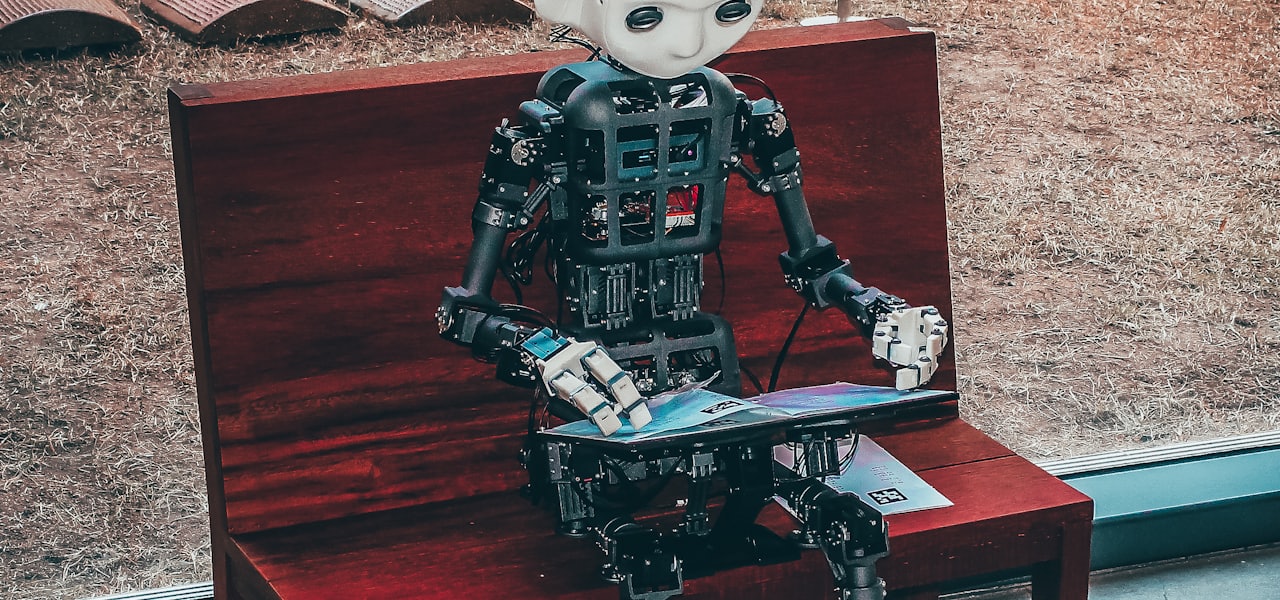
The Frankenstein complex is a term coined by Isaac Asimov in his robot series, referring to the fear of mechanical men. == History == Some of Asimov's science fiction short stories and novels predict that this suspicion will become strongest and most widespread in respect of "mechanical men" that most-closely resemble human beings (see android), but it is also present on a lower level against robots that are plainly electromechanical automatons. The "Frankenstein complex" is similar in many respects to Masahiro Mori's uncanny valley hypothesis. The name, "Frankenstein complex", is derived from the name of Victor Frankenstein in the 1818 novel Frankenstein; or, The Modern Prometheus by Mary Shelley. In Shelley's story, Frankenstein created an intelligent, somewhat superhuman being, but he finds that his creation is horrifying to behold and abandons it. This ultimately leads to Victor's death at the conclusion of a vendetta between himself and his creation. In much of his fiction, Asimov depicts the general attitude of the public towards robots as negative, with ordinary people fearing that robots will either replace them or dominate them, although dominance would not be allowed under the specifications of the Three Laws of Robotics, the first of which is: "A robot may not harm a human being or, through inaction, allow a human being to come to harm." However, Asimov's fictitious earthly public is not fully persuaded by this, and remains largely suspicious and fearful of robots. I, Robot's short story "Little Lost Robot" is about this "fear of robots". In Asimov's robot novels, the Frankenstein complex is a major problem for roboticists and robot manufacturers. They do all they can to reassure the public that robots are harmless, even though this sometimes involves hiding the truth because they think that the public would misunderstand it. The fear by the public and the response of the manufacturers is an example of the theme of paternalism, the dread of paternalism, and the conflicts that arise from it in Asimov's fiction. The same theme occurs in many later works of fiction featuring robots, although it is rarely referred to as such.